


What is IP Address Abuse
 Published:Last Updated:
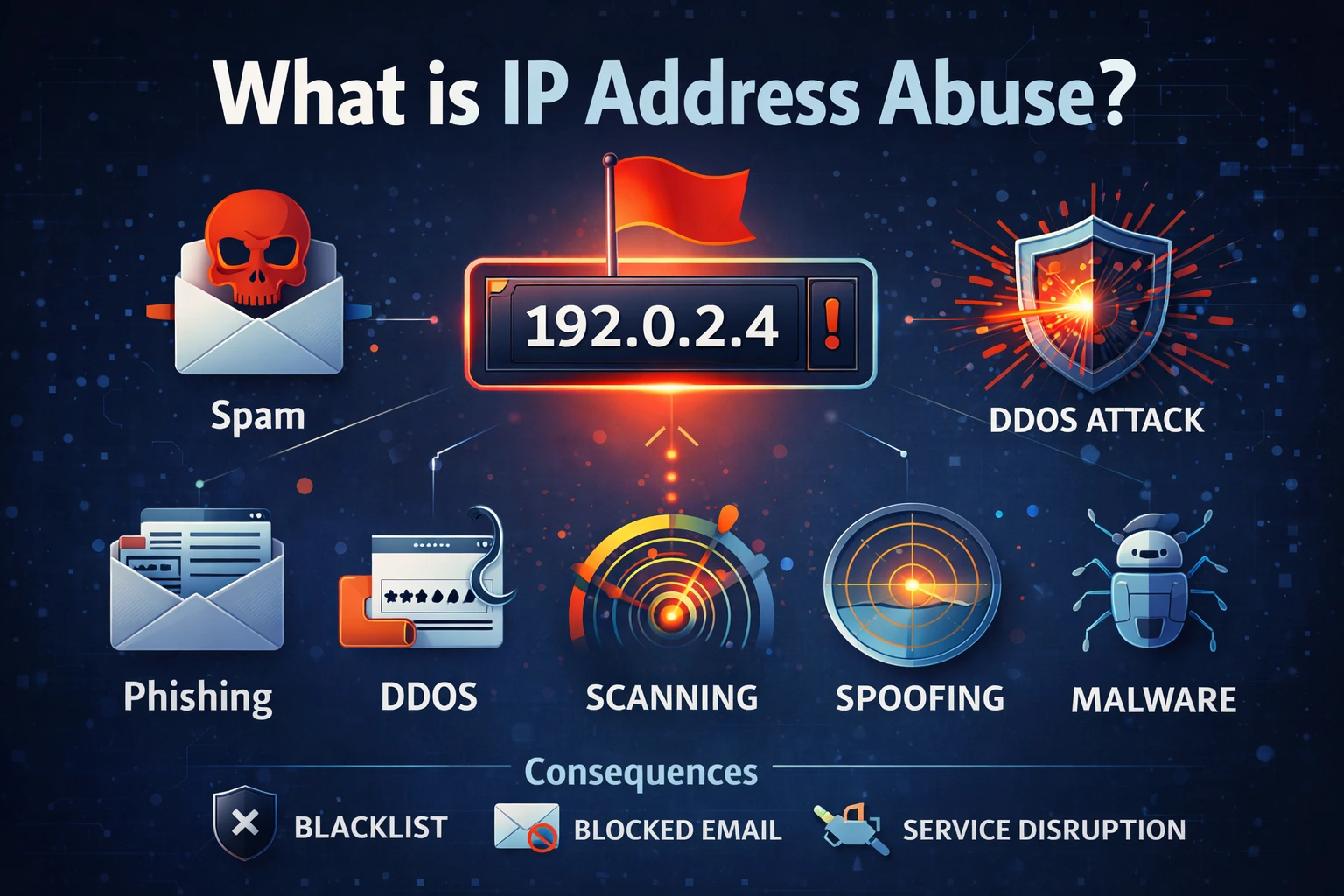
IP address abuse refers to the misuse of an IP address for harmful, deceptive, disruptive, or unauthorized activity on the Internet. In practical terms, it means an IP address is being used in ways that damage networks, services, users, or the broader trust environment of online communication.
IP address abuse can affect email delivery, website availability, network security, user trust, and infrastructure reputation. It is one of the main reasons operators monitor IP reputation carefully and respond quickly when abuse reports appear.
Why IP Address Abuse Matters
Every public-facing service depends on trust in the IPs behind it. When an IP address is abused, the damage does not stop with the specific incident. It can affect deliverability, blacklist status, hosting reputation, routing trust, customer experience, and even the future usability of that IP block.
This is why IP abuse is not just a cybersecurity issue. It is also an operational and infrastructure issue. A clean IP is easier to use, easier to trust, and more valuable than one linked to repeated abuse.
What Counts as IP Address Abuse?
IP address abuse includes a wide range of activities where an address is used to harm others, disrupt systems, or violate acceptable use expectations. Some forms are obviously malicious, while others begin as negligence, poor security, or weak operational control but still create real harm.
1. Spam and Unsolicited Bulk Email
One of the most common examples of IP abuse is spam. If an IP sends large volumes of unsolicited email, it can quickly lose trust and appear on reputation or blocklist systems. This often leads to delivery failures and blacklist problems across email networks.
2. Phishing and Fraud
An IP address may be abused to host phishing pages, fraudulent services, or impersonation infrastructure that steals credentials, payment data, or sensitive information from users.
3. Malware Distribution
Some abused IPs are used to distribute malware, command infected devices, or support compromise campaigns. This can include malicious downloads, exploit delivery, or botnet activity.
4. DDoS and Disruptive Traffic
An IP can also be abused to send denial-of-service traffic or participate in attacks that overwhelm online services. In these cases, the IP becomes part of a disruption campaign rather than a normal communication channel.
5. Hacking Attempts and Unauthorized Access
Repeated login attacks, scanning, brute-force behavior, exploitation attempts, and unauthorized access activity are also common forms of IP abuse.
6. Unauthorized Routing Announcements
IP abuse can also occur at the routing layer. If someone announces IP space they do not legitimately control, this can create route hijacks, leaks, or trust failures across the Internet. That is why routing security and RPKI have become increasingly important to infrastructure operators.
Common Forms of IP Address Abuse
| Abuse Type | What It Looks Like | Why It Matters |
|---|---|---|
| Spam | Mass unsolicited email or email abuse | Damages sender reputation and email deliverability |
| Phishing | Fake login pages or impersonation services | Steals credentials and harms users |
| Malware activity | Hosting or delivering malicious payloads | Compromises systems and spreads attacks |
| DDoS / disruptive traffic | Flooding targets with malicious traffic | Reduces service availability and stability |
| Scanning / hacking attempts | Brute force, probes, exploit attempts | Creates security risk and operational load |
| Routing abuse | Unauthorized prefix announcements | Can cause hijacks, leaks, and trust failures |
How IP Address Abuse Happens
IP abuse does not always begin with deliberate malice by the recorded holder. In many cases, the address space is abused because a server is compromised, a service is poorly secured, credentials are stolen, or infrastructure is left exposed. In other cases, the abuse is intentional from the beginning, such as spam operations, phishing campaigns, or malicious routing behavior.
This is why both technical security and operational discipline matter. Abuse can result from attackers, weak controls, or reckless use of infrastructure.
What Happens When an IP Address Is Abused?
Reputation Damage
An abused IP can quickly lose trust with email providers, networks, threat intelligence systems, and downstream operators. Once reputation is damaged, normal use becomes harder.
Blocklisting or Filtering
If abuse is serious or repeated, the IP may be blocklisted or filtered. This can reduce email delivery, limit service reachability, and create long remediation cycles.
Operational and Commercial Impact
IP abuse can increase support costs, create customer trust issues, interrupt service, and reduce the practical value of an address block.
IP Address Abuse vs IP Reputation
IP address abuse is the harmful activity itself. IP reputation is the trust assessment that develops around the address based on that behavior. Abuse harms reputation, and poor reputation can in turn lead to filtering, blocklisting, or loss of operational trust.
That is why operators increasingly treat abuse prevention as part of infrastructure hygiene, not just as a security afterthought.
How to Reduce IP Address Abuse Risk
Secure Your Systems
Patch servers, protect credentials, restrict access, and monitor exposed services so attackers cannot turn your infrastructure into an abuse source.
Monitor Reputation and Abuse Reports
Abuse reports and reputation signals should be reviewed quickly. Delayed response can make remediation much harder and increase the chance of long-term reputation problems.
Use Routing Security Controls
At the network layer, better routing hygiene and mechanisms such as RPKI can reduce the risk of unauthorized announcements and routing abuse.
Maintain Clean Operational Practices
Good sending behavior, clear abuse contacts, responsible hosting practice, and internal monitoring all help reduce abuse exposure over time.
Why IP Address Abuse Matters in the IPv4 Era
In a market where public IPv4 remains scarce and commercially significant, abuse has a direct effect on real infrastructure value. A block with clean history is easier to deploy, easier to trust, and often more strategically useful than one associated with repeated abuse.
This is also why it helps to understand how online abuse and security risks affect trust on the Internet, and why routing protections such as RPKI against unauthorised announcements are becoming more important for serious operators.
Conclusion
IP address abuse is the misuse of an IP address for harmful, deceptive, disruptive, or unauthorized activity. It can include spam, phishing, malware distribution, DDoS, hacking attempts, and routing abuse. The consequences go beyond one security incident: abuse can damage reputation, trigger filtering or blocklisting, disrupt operations, and reduce the practical value of address space. That is why preventing IP abuse is an essential part of protecting both network reliability and long-term infrastructure trust.
Read More: What Is a Blacklisted IP Address?
Read More: Understanding IP Blocklists
Frequently Asked Questions (FAQ)
1. What is IP address abuse?
IP address abuse is the misuse of an IP address for harmful, deceptive, disruptive, or unauthorized activity on the Internet.
2. What are common examples of IP address abuse?
Common examples include spam, phishing, malware hosting, DDoS traffic, hacking attempts, and unauthorized route announcements.
3. Can an IP be abused even if the owner did not intend it?
Yes. Compromised servers, stolen credentials, weak controls, or insecure services can allow attackers to abuse an IP without the legitimate holder intending it.
4. Why does IP abuse affect reputation?
Because receiving systems, blocklists, and threat intelligence tools use abuse signals to decide whether an IP should be trusted, filtered, or rejected.
5. How can operators reduce IP address abuse risk?
Operators can reduce risk by securing systems, monitoring abuse and reputation, maintaining good email and hosting practices, and using routing security controls such as RPKI where appropriate.