


Understanding IP Blocklists
 Published:Last Updated:
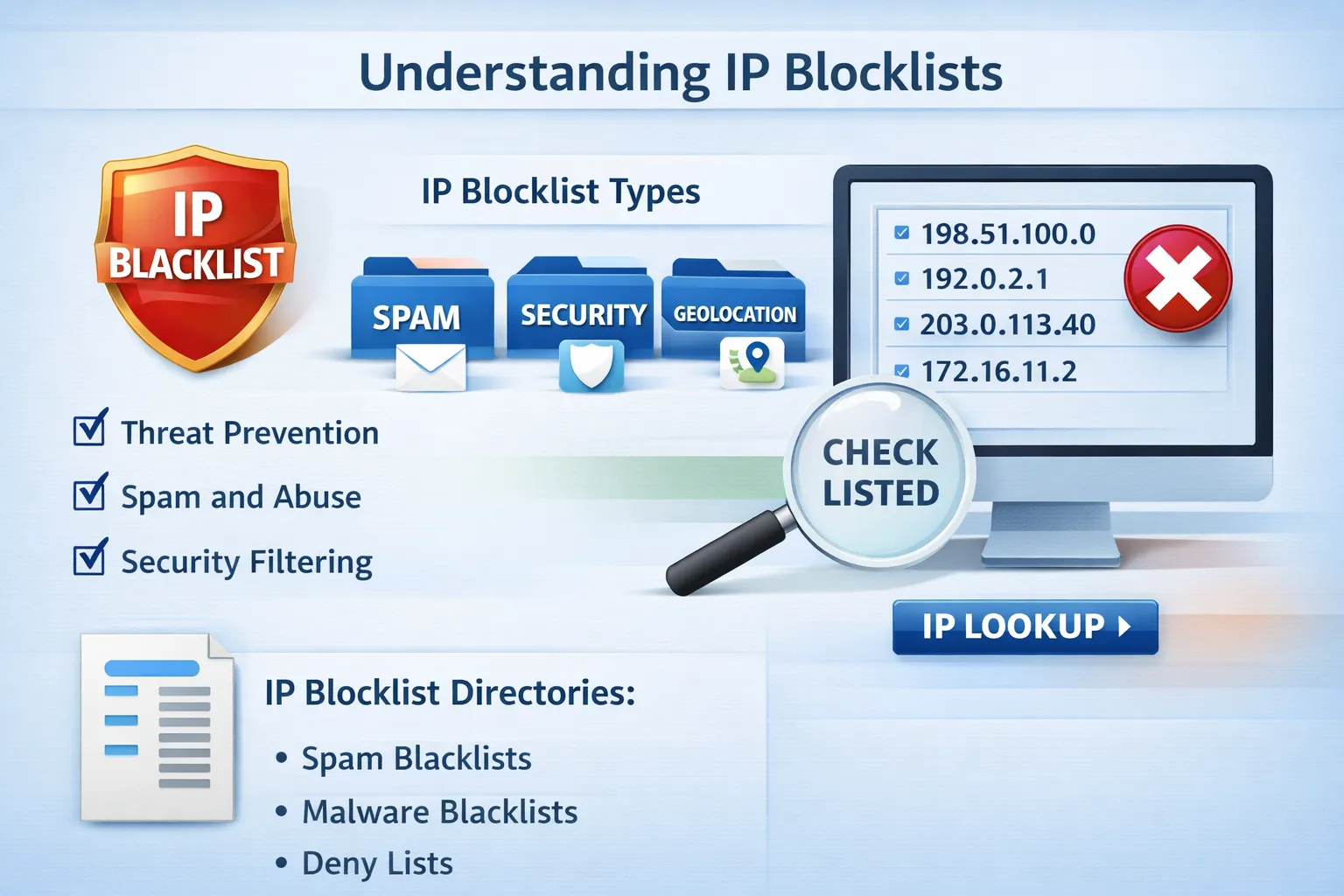
Understanding IP blocklists is important for anyone working with email systems, hosting infrastructure, IP reputation, or cybersecurity. An IP blocklist is a database or lookup system that identifies IP addresses, IP ranges, or related infrastructure that may be associated with abuse, spam, malware, phishing, or policy-sensitive behavior.
In practical terms, IP blocklists help receiving systems decide whether traffic from a given IP should be trusted, filtered, rejected, or treated with extra caution. They are especially common in email security, where mail servers use blocklists to reduce spam and malicious traffic before it reaches users.
What Is an IP Blocklist?
An IP blocklist is a list of IP addresses or address ranges that have been identified as risky, abusive, compromised, or unsuitable for certain types of traffic. Many blocklists are published using DNS-based systems, often called DNSBLs, so that mail servers and security tools can query them quickly in real time.
A blocklist does not always mean the same thing in every case. Some lists focus on clearly malicious behavior. Others focus on policy rules, such as IP ranges that should never send email directly to the public Internet.
Why IP Blocklists Exist
IP blocklists exist because the Internet needs practical ways to reduce abuse at scale. Spam, phishing, botnet traffic, malware distribution, and compromised systems can generate huge volumes of unwanted or dangerous traffic. Blocklists help network and mail administrators identify risky sources quickly and make better filtering decisions.
Without blocklists, each receiving server would need to independently discover and evaluate every abusive source, which would be far less efficient.
How IP Blocklists Work
Most IP blocklists work by allowing a receiving system to query whether a connecting IP appears on a known list. In email systems, the sending server’s IP address is checked against one or more DNSBLs. If the IP is listed, the mail server may reject the message, mark it as suspicious, increase its spam score, or apply additional filtering rules.
This is why blocklists are often part of a larger anti-abuse system rather than the only decision-making layer.
Common Types of IP Blocklists
1. Spam-Based Blocklists
These lists focus on IPs that are observed sending spam or behaving like spam infrastructure. They are widely used by email administrators to reduce unsolicited bulk mail.
2. Exploit or Compromise Blocklists
These lists focus on hijacked devices, exploited hosts, malware-related systems, and compromised infrastructure that may be participating in abuse.
3. Policy Blocklists
These lists are not always about malicious activity. Some IP ranges are listed because they are not supposed to send email directly to the final destination. For example, end-user or dynamic IP ranges are often treated this way.
4. Domain and Combined Reputation Lists
Some reputation systems go beyond IPs and also track domains, URLs, or broader infrastructure patterns. This gives operators a more complete view of abusive behavior across multiple layers.
Examples of Well-Known IP Blocklist Categories
| Category | What It Usually Targets | Why It Matters |
|---|---|---|
| Spam blocklist | IPs sending spam or supporting spam operations | Helps reduce unwanted mail and abusive sending behavior |
| Exploit blocklist | Compromised or hijacked hosts | Flags systems involved in malware or botnet activity |
| Policy blocklist | IPs that should not send mail directly | Prevents misuse of residential, dynamic, or end-user ranges |
| Domain reputation list | Domains linked to abuse, phishing, or spam | Extends filtering beyond IP-only checks |
Why an IP Can End Up on a Blocklist
1. Spam Activity
If an IP sends unsolicited bulk email or is part of spam infrastructure, it may be listed by a spam-focused blocklist.
2. Compromised Systems
A hacked mail server, infected host, or hijacked device may start sending malicious traffic without the owner realizing it.
3. Poor Sending Practices
Even if the intent is not malicious, bad email practices can harm reputation and lead to listing or filtering issues.
4. Policy Reasons
Some IP ranges are listed because they are not supposed to send certain traffic directly, especially outbound mail to the public Internet.
What Happens If an IP Is Blocklisted?
If an IP is blocklisted, email from that IP may be rejected, filtered to spam, or subjected to additional checks. In other cases, reputation-aware systems may lower trust in connections from that address. The impact depends on which list the IP appears on, how widely the list is used, and what policy the receiving server applies.
This is why IP blocklist status can affect deliverability, service reliability, and the real operational value of address space.
IP Blocklists vs IP Reputation
IP blocklists and IP reputation are closely related, but they are not exactly the same. A blocklist is usually a direct listing result, while reputation is a broader trust assessment based on behavior, history, and risk signals. A poor reputation may increase the chance of listing, and a listing may worsen reputation further.
This matters in scarcity-driven IPv4 environments, where clean reputation can influence how usable a block really is. It also connects to the broader issue of why IP address pricing matters, because bad reputation can reduce practical value.
Why IP Blocklists Matter in IPv4 Operations
As public IPv4 became scarcer, operational cleanliness became more important. A clean IPv4 block is often more attractive than one associated with spam, abuse, or repeated listings. This is one reason blacklist history can influence how a block is viewed in transfers, leasing, and infrastructure planning.
It also explains why some infrastructure debates now go beyond simple scarcity and ask deeper questions about trust, governance, and long-term utility across Internet number resources.
How to Reduce Blocklist Risk
Organizations can reduce blocklist risk by securing mail systems, preventing abuse, using proper email authentication, monitoring outbound traffic, and avoiding poor sending practices. In email operations, prevention is usually much easier than reputation recovery after a listing event.
Conclusion
An IP blocklist is a system that identifies IP addresses or ranges associated with abuse, compromise, spam, or policy-sensitive behavior. Blocklists are widely used in email filtering and security operations because they help receiving systems make faster trust decisions. Some lists target clearly malicious activity, while others apply policy rules to IP ranges that should not send traffic directly. Understanding those differences is essential for anyone managing mail infrastructure, IP reputation, or valuable IPv4 resources.
Read More: What Is a Blacklisted IP Address?
Read More: How to Secure IP Address from Cyber Attacks
Supporting References
- RFC 5782: DNS Blacklists and Whitelists
- RFC 6471: Overview of Best Email DNS-Based List Operational Practices
- Spamhaus Blocklists Overview
- Spamhaus Blocklist (SBL)
- Spamhaus Exploits Blocklist (XBL)
- Spamhaus Policy Blocklist (PBL)
- Spamhaus Domain Blocklist (DBL)
Frequently Asked Questions (FAQ)
1. What is an IP blocklist?
An IP blocklist is a database or lookup system that identifies IP addresses or ranges associated with abuse, compromise, spam, or policy-sensitive behavior.
2. Are all blocklists about malicious activity?
No. Some blocklists are policy-based and include IP ranges that should not send email directly even if they are not malicious.
3. Why are IP blocklists used in email systems?
They help mail servers reduce spam, malware, phishing, and other abusive traffic by checking sender IPs against known reputation data.
4. What is the difference between an IP blocklist and IP reputation?
A blocklist is usually a direct listing result, while reputation is a broader trust assessment based on behavior, history, and risk signals.
5. Why do IP blocklists matter for IPv4 value?
Because a block with poor blacklist history may be less useful operationally, which can affect its practical attractiveness in leasing, transfers, or infrastructure use.