


Selling vs Leasing IPv4 Addresses: Which Option Is Better for IP Holders?
 Published:Last Updated:
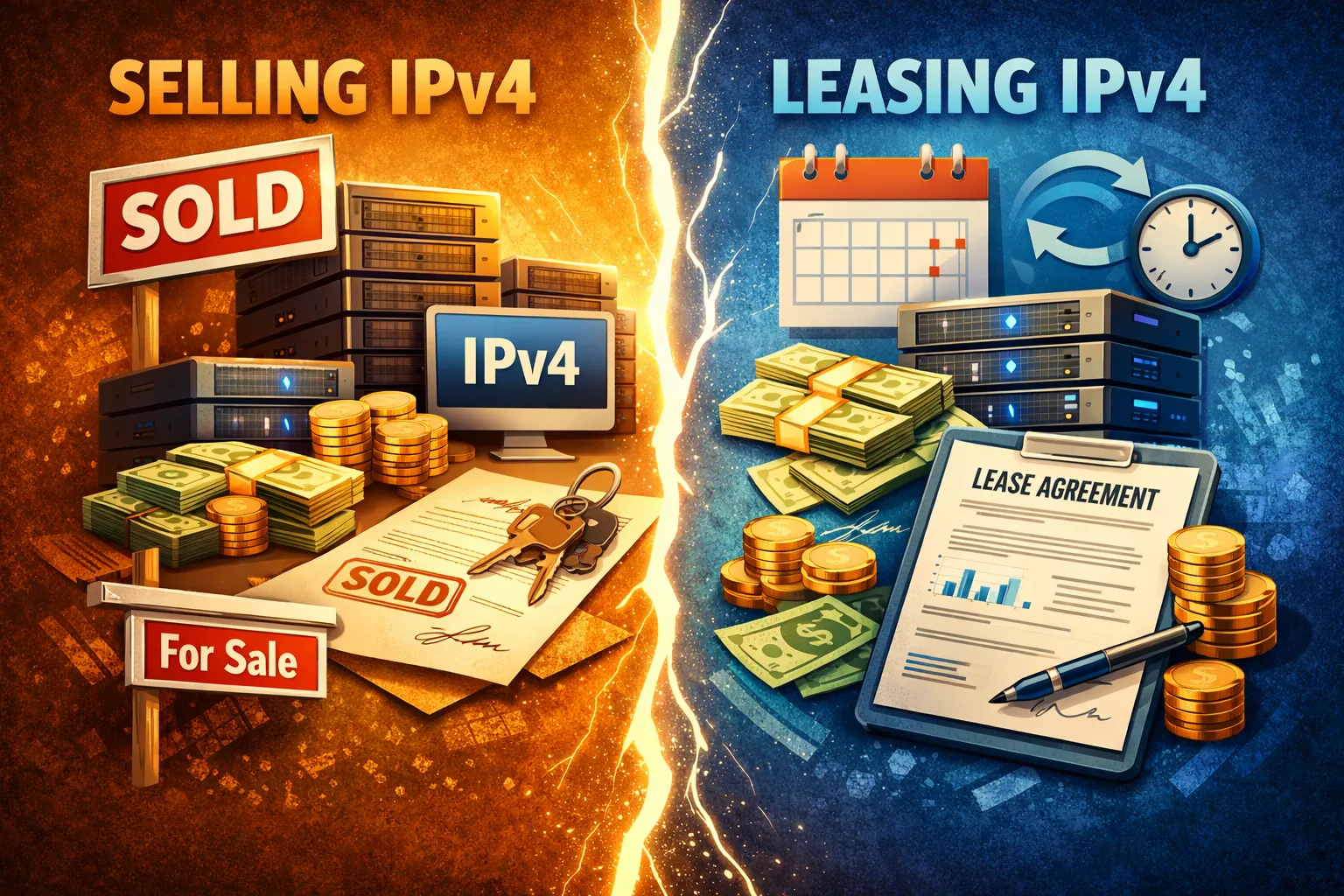
Table of Contents
- What Does It Mean to Sell IPv4 Addresses?
- What Does It Mean to Lease IPv4 Addresses?
- Selling vs Leasing: Key Differences
- When Selling May Be the Better Option
- When Leasing May Be the Better Option
- Why This Decision Matters in a Post-Exhaustion Market
- Conclusion
- Frequently Asked Questions (FAQ)
Selling and leasing IPv4 addresses are two different ways for organizations to realize value from unused IP resources. Selling usually provides a one-time lump sum and permanently transfers control of the address block, while leasing can generate recurring income and allow the holder to retain long-term control of the asset.
In a market shaped by IPv4 scarcity, the decision between selling and leasing depends on business priorities such as liquidity, recurring revenue, future flexibility, and operational responsibility.
What Does It Mean to Sell IPv4 Addresses?
Selling IPv4 addresses generally means transferring the registration of an address block to another eligible party through a policy-compliant process. Once the transfer is complete, the seller no longer controls the block and receives immediate value from the transaction.
This option is often attractive to organizations that no longer need part of their IPv4 holdings and want to convert underused digital resources into immediate capital.
Benefits of Selling
Selling IPv4 addresses may be beneficial if your organization wants to unlock immediate funds, simplify asset management, and eliminate future administrative or compliance responsibilities connected to the block.
What Does It Mean to Lease IPv4 Addresses?
Leasing IPv4 addresses allows another party to use the address space for a defined period while the holder retains ownership or long-term control of the resource. This approach enables the address holder to earn recurring revenue instead of exiting the asset completely.
For many organizations, leasing is attractive because it preserves future optionality. If internal needs change later, the holder may still have access to the block after the lease term ends.
Benefits of Leasing
Leasing can generate predictable recurring income, preserve asset control, and provide greater flexibility than a permanent transfer. It may suit organizations that believe their IPv4 resources still have long-term strategic or financial value.
Selling vs Leasing: Key Differences
1. Cash Flow
Selling provides an upfront lump sum. Leasing generates revenue over time. Organizations that need immediate liquidity may prefer selling, while those that value recurring yield may prefer leasing.
2. Ownership and Control
A sale usually means giving up future control of the IPv4 block. Leasing allows the holder to retain the resource after the lease ends. This makes leasing more attractive for organizations that are not ready to part with their address space permanently.
3. Risk Exposure
Selling reduces future market exposure because the transaction is completed once. Leasing keeps the holder exposed to operational and market factors such as lessee performance, address reputation, routing coordination, and future pricing changes.
4. Administration
Selling may be cleaner in the long run once the transfer is completed, but the transfer itself still involves documentation and policy compliance. Leasing can require more ongoing management, including contracts, abuse handling, routing authorization, and monitoring of address usage.
When Selling May Be the Better Option
Selling may be the better option if your organization no longer needs the address block, wants immediate cash, prefers certainty over future recurring revenue, or wants to exit IPv4 management entirely.
This strategy may also suit businesses that are restructuring, reducing infrastructure, or monetizing surplus legacy resources that are unlikely to be needed again.
When Leasing May Be the Better Option
Leasing may be the better option if your organization wants recurring income, wants to retain long-term control of the block, or believes the IPv4 resource may still be useful in the future.
It can also be attractive for holders who see IPv4 space as a continuing operational asset rather than something to dispose of in a single transaction.
Why This Decision Matters in a Post-Exhaustion Market
IPv4 exhaustion changed address space from an abundant technical resource into a scarce and economically meaningful infrastructure asset. Because free IPv4 pools are no longer broadly available, organizations increasingly rely on transfer and leasing strategies to obtain or monetize address space.
This means the choice between selling and leasing is no longer just a technical matter. It is a strategic business decision about how value should be realized from an increasingly limited digital resource.
Conclusion
Selling and leasing IPv4 addresses are both valid strategies, but they serve different goals. Selling is generally better for immediate liquidity and a clean exit, while leasing is better for recurring income, retained control, and long-term flexibility. In a market still shaped by IPv4 scarcity and ongoing demand, the right choice depends on whether your organization values certainty now or continuing value over time.
Also Read: Current IPv4 lease rates: what to expect in 2026
Also Read: Registry Risk in 2026: Are Your IP Assets Secure?
Frequently Asked Questions (FAQ)
1. Is it better to sell or lease IPv4 addresses?
It depends on your goals. Selling is usually better for immediate cash, while leasing may be better for recurring income and retaining long-term control of the resource.
2. Do you keep ownership when leasing IPv4 addresses?
In most cases, yes. Leasing usually gives another party temporary usage rights, while the holder keeps ownership or long-term control of the address block.
3. Why would a company sell IPv4 instead of lease it?
A company may prefer selling if it wants immediate capital, no longer expects to use the address block, or wants to avoid the ongoing administration involved in leasing.
4. Why is leasing IPv4 still attractive?
Leasing remains attractive because it can provide recurring revenue, preserve future flexibility, and allow holders to benefit from continued demand for scarce IPv4 resources.
5. Does IPv4 scarcity affect the sell-versus-lease decision?
Yes. IPv4 scarcity is one of the main reasons both selling and leasing remain valuable strategies, because organizations still depend on IPv4 space even after free pools were exhausted.
Last Updated: 17-03-2026