

The pros and cons of LAN and WAN in 2025 networking
 Published:Last Updated:
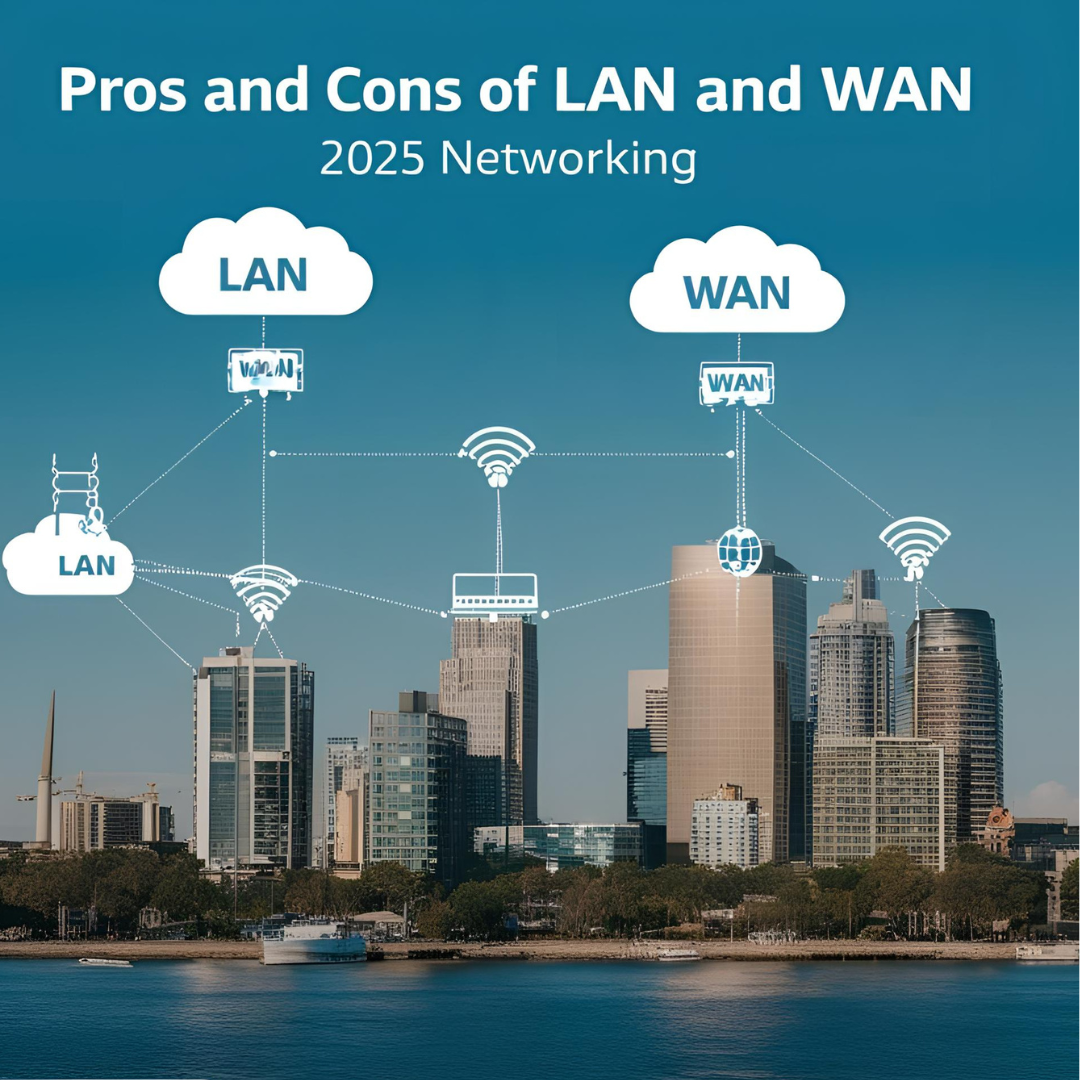
Networking plays a crucial role in supporting business operations, communication, and data management. As businesses continue to expand and grow, the need for robust and efficient networking systems has never been more important. Two of the most widely used types of networks are Local Area Networks (LAN) and Wide Area Networks (WAN). Both LAN and WAN have unique characteristics that cater to different networking needs, and understanding their advantages and disadvantages is essential in making an informed decision about the type of network that best suits a particular business or use case.
In this blog post, we will explore the pros and cons of LAN and WAN networking in 2025, helping businesses and individuals understand how these networks work, their benefits, and the challenges they may face. As the landscape of digital transformation evolves, it’s important to evaluate which type of network is best suited to specific needs, whether it’s for a small office, a global corporation, or an Internet of Things (IoT)-driven ecosystem.
What is a LAN (Local Area Network)?
A Local Area Network (LAN) is a network that connects devices within a small geographical area, such as a single building, office, or campus. It typically operates over Ethernet cables or Wi-Fi, providing high-speed communication between devices. LANs are used to share resources such as files, printers, and internet connections. The devices in a LAN can include computers, laptops, smartphones, and other networked devices that need to communicate or share information.
Key Characteristics of LAN:
-
Small-scale network limited to a single location or facility.
-
Provides high-speed data transmission with low latency.
-
Allows for resource sharing within the local environment.
-
Generally owned and managed by a single organisation or entity.
What is a WAN (Wide Area Network)?
A Wide Area Network (WAN) connects multiple LANs over a large geographical area, often spanning cities, countries, or even continents. WANs typically use leased communication lines or the public internet to transmit data between remote locations. This allows companies or organisations to communicate and share data between their offices or branches spread across vast distances.
Key Characteristics of WAN:
-
Large-scale network covering a broad geographical area.
-
Can connect multiple locations, data centres, or regions.
-
Utilises various communication technologies, including leased lines, satellite links, and fibre optics.
-
Requires more complex infrastructure management compared to LANs.
Pros of LAN Networking in 2025
-
Speed and Performance: One of the primary advantages of LANs is their high-speed performance. Because LANs operate within a limited geographical area, the data transfer speed is generally faster than WANs. The use of Ethernet cables or Wi-Fi ensures a low-latency connection, which is ideal for time-sensitive applications like video conferencing, online gaming, and real-time collaboration.
-
Cost-Effective for Smaller Organisations: LANs are typically less expensive to set up and maintain compared to WANs. They don’t require extensive infrastructure or leased communication lines, making them suitable for small and medium-sized businesses (SMBs) or organisations with a limited number of employees and devices. The cost of running a LAN mainly includes the equipment (routers, switches, and cables) and the cost of an internet connection.
-
Ease of Installation and Maintenance: Setting up a LAN is relatively simple compared to a WAN. LANs don’t require complex configurations or ongoing maintenance from service providers. Organisations can install and configure LANs using readily available networking hardware and software, and the network can be easily scaled by adding more devices to the system.
-
Increased Control and Security: With LANs, businesses have more control over the network and its security. Since the network operates within a confined area, it’s easier to manage and monitor. Organisations can implement strong firewalls, network access controls, and encryption measures to protect the data and ensure secure communication within the network.
-
Resource Sharing: LANs allow for efficient sharing of resources like printers, files, and internet connections. In a business setting, this leads to higher productivity and reduced costs, as multiple devices can share the same resources without the need for duplication.
Cons of LAN Networking in 2025
-
Limited Coverage: While LANs are great for local networks, their reach is restricted to a small area. They can’t be used for connecting multiple remote offices, making them unsuitable for large-scale organisations with geographically dispersed teams.
-
Scalability Limitations: LANs are easier to set up in smaller environments, but they can face scalability issues as the number of devices or users increases. Managing large networks of devices within a confined area can become complex and resource-intensive as the network expands.
-
Single Point of Failure: In a LAN, if the central router or switch fails, it can bring down the entire network. While LANs offer high performance and reliability, they can be vulnerable to disruptions if critical components malfunction.
Pros of WAN Networking in 2025
-
Wide Geographical Coverage: The primary advantage of WANs is their ability to connect devices, users, and offices across large geographical distances. WANs are ideal for organisations that need to connect multiple locations or maintain a global presence. Companies with branches in different cities or countries can use WANs to link their networks and ensure seamless communication between all locations.
-
Centralised Data and Resources: With a WAN, companies can centralise their data and resources, allowing employees at different locations to access the same information, applications, and services. This is crucial for businesses with multiple branches or remote workers. Centralisation helps improve collaboration, reduce redundancy, and ensure data consistency.
-
Support for Remote Access: WANs are ideal for supporting remote access solutions. With a WAN, employees can securely access company resources from any location, whether they are working from home, travelling, or at a different branch. This enables organisations to facilitate flexible working arrangements and improve employee productivity.
-
Scalability: Unlike LANs, WANs are highly scalable. Businesses can extend their network as they grow, adding new locations, users, and resources without major reconfigurations. WANs are flexible enough to accommodate the expansion of global operations, as businesses can connect new offices or data centres seamlessly.
-
Resilience and Redundancy: WANs can be designed to offer high levels of resilience. By leveraging multiple communication technologies (such as fibre optics, satellite links, and leased lines), WANs can provide redundancy, ensuring that if one link fails, the traffic is rerouted through another. This improves the overall reliability of the network.
Cons of WAN Networking in 2025
-
High Costs: One of the major disadvantages of WANs is the high cost associated with setting up and maintaining the network. WANs often require leased communication lines or expensive infrastructure, such as fibre-optic cables or satellite links. This makes WANs more expensive to deploy and maintain compared to LANs.
-
Complexity in Management: Managing a WAN requires more expertise and resources compared to LANs. Since WANs span multiple locations, they require dedicated teams for network management, security monitoring, and troubleshooting. WAN administrators must ensure that the network is properly configured and that there are no disruptions in service.
-
Latency and Performance Issues: While WANs can connect multiple locations, the performance may not be as fast as LANs, especially when data must travel long distances or pass through multiple intermediaries. WANs often suffer from higher latency and slower data transfer speeds, which can impact time-sensitive applications.
-
Security Challenges: WANs can be more vulnerable to cyberattacks and security breaches, especially since they often involve public networks (such as the internet). Securing a WAN requires implementing robust encryption, firewalls, and VPNs to safeguard sensitive data. Without proper security measures, WANs can become a target for malicious actors.
Conclusion: LAN vs. WAN in 2025
In 2025, both LAN and WAN play crucial roles in networking, but they are designed to meet different needs. LANs are ideal for small, localised environments, offering high-speed performance, simplicity, and security. They are best suited for businesses with limited geographical reach and fewer scalability requirements.
On the other hand, WANs are perfect for larger organisations with a global presence or multiple branches. They offer the ability to connect far-flung offices, centralise resources, and support remote access, although they come with higher costs and greater complexity.
Ultimately, the choice between LAN and WAN depends on the size, structure, and goals of the organisation. Many businesses use both types of networks in tandem, with LANs serving individual locations and WANs connecting them all. As businesses continue to expand globally, the demand for both LAN and WAN will only increase, driving advancements in technology to meet the growing need for efficient, secure, and scalable networking solutions.