


LAN vs. WAN: Understanding the Differences and Their Importance
 Published:Last Updated:
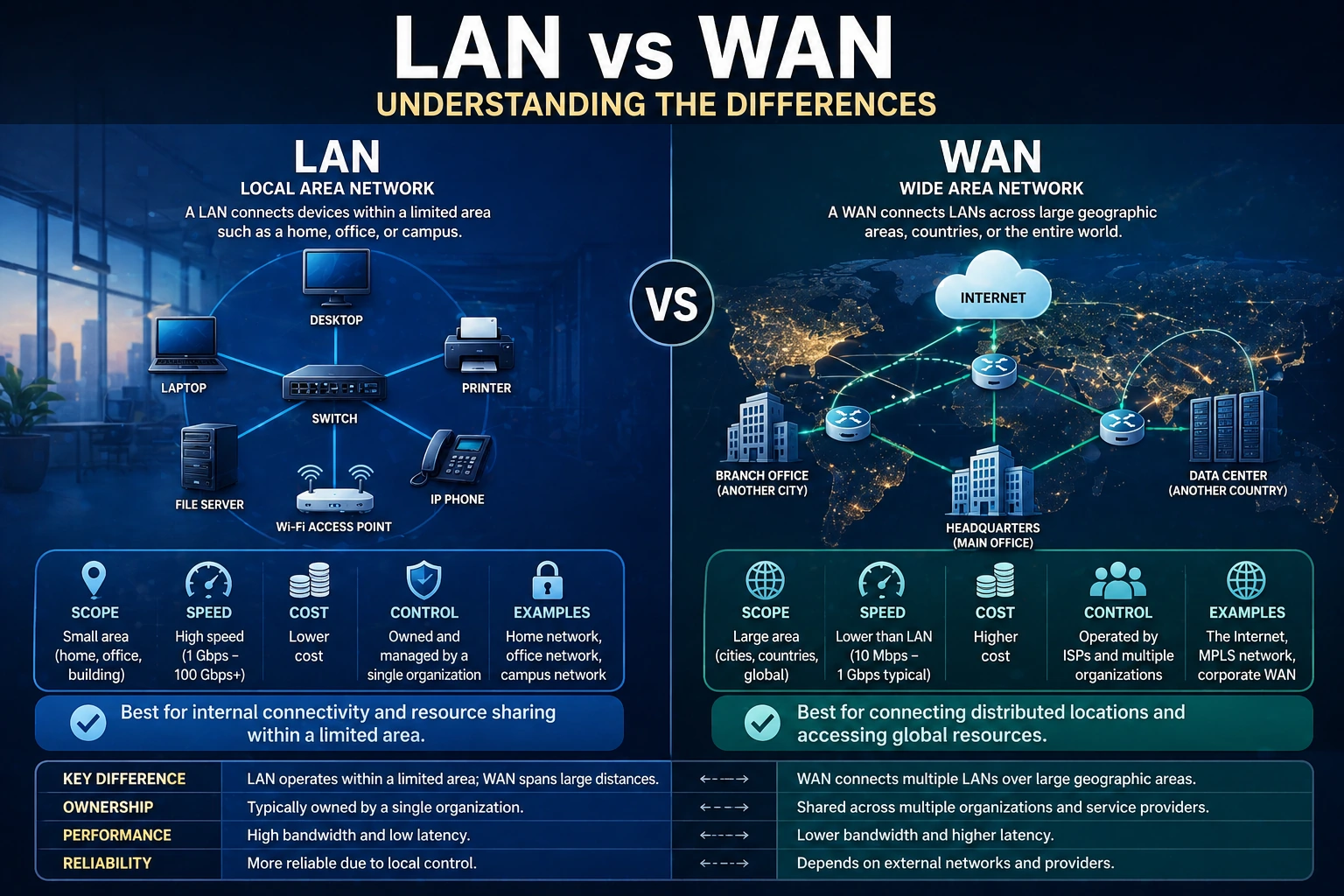
In the realm of networking, the terms Local Area Network (LAN) and Wide Area Network (WAN) are frequently used to describe the scope and functionality of network infrastructures. Understanding the differences between LAN and WAN is crucial for businesses and individuals alike, as it impacts network performance, security, and scalability. This article delves into the distinctions between LAN and WAN, their respective use cases, and why these differences matter in today's interconnected world.
What is a LAN?
A Local Area Network (LAN) is a computer network that connects devices within a limited geographical area, such as a home, office, or school. LANs are typically characterized by high-speed data transfer rates and low latency, making them ideal for environments where quick and reliable communication is essential. The most common type of LAN is the Ethernet LAN, which uses cables to connect devices. However, wireless LANs (WLANs) are also prevalent, utilizing Wi-Fi technology to provide wireless connectivity within a specific area.
Key Features of LAN:
1. High Speed: LANs can achieve data transfer rates of up to 10 Gbps or even higher with advanced technologies.
2. Low Latency: The close proximity of devices within a LAN results in minimal delays in data transmission.
3. Security: LANs can be secured using firewalls, encryption, and other security measures to protect sensitive information.
4. Scalability: While LANs are designed for smaller areas, they can be scaled to accommodate a growing number of devices within the same geographical area.
What is a WAN?
A Wide Area Network (WAN) is a computer network that spans a wide geographical area, often encompassing multiple cities, countries, or even continents. WANs are designed to connect LANs and other networks over long distances, enabling communication between devices that are far apart. The most well-known example of a WAN is the Internet, which connects networks worldwide. WANs typically use a combination of wired and wireless technologies, including fiber optics, satellite links, and cellular networks, to facilitate long-distance communication.
Key Features of WAN:
1. Wide Coverage: WANs can cover vast geographical areas, connecting devices across cities, countries, and continents.
2. Lower Speed: Due to the longer distances involved, WANs generally have lower data transfer rates compared to LANs.
3. Higher Latency: The extended distances in WANs result in higher latency, which can impact real-time applications.
4. Complexity: WANs are more complex to set up and manage, requiring advanced routing protocols and network management techniques.
Key Differences Between LAN and WAN
The primary difference between LAN and WAN lies in their geographical coverage. LANs are confined to a small area, such as a single building or campus, and are typically owned and managed by a single organization. This makes LANs easier to secure and manage, with high-speed data transfer rates and low latency. In contrast, WANs cover much larger areas, often spanning multiple cities, countries, or even continents. They are designed to connect LANs and other networks over long distances, using a combination of wired and wireless technologies. WANs are more complex to set up and manage, with lower data transfer rates and higher latency.
Why LAN and WAN Differences Matter
Understanding the differences between LAN and WAN is essential for several reasons:
1. Network Design and Planning: Knowing the scope and requirements of your network helps in designing and implementing the appropriate infrastructure. For example, a small business might require a LAN to connect devices within its office, while a multinational corporation would need a WAN to connect its various branches.
2. Performance Optimization: The choice between LAN and WAN can significantly impact network performance. LANs are better suited for applications requiring high-speed and low-latency communication, such as video conferencing and large file transfers. WANs, on the other hand, are designed for long-distance communication and can handle a broader range of applications, albeit with higher latency.
3. Security Considerations: LANs can be more easily secured due to their limited geographical area and controlled environment. WANs, however, require more robust security measures due to their extensive coverage and exposure to external threats. Understanding these differences helps in implementing appropriate security protocols to protect sensitive data.
4. Cost Management: LANs are generally less expensive to set up and maintain compared to WANs, primarily due to shorter distances and simpler infrastructure. For organizations with limited budgets, understanding the cost implications of LAN and WAN can help in making informed decisions about network investments.
5. Scalability and Flexibility: As businesses grow, their network requirements may change. Understanding the scalability of LAN and WAN helps in planning for future expansion. While LANs can be scaled to accommodate more devices within the same geographical area, WANs offer greater flexibility in connecting multiple locations.
Real-World Applications
LAN Applications:
Home Networks: Connecting computers, smartphones, and smart home devices within a household.
Office Networks: Linking computers, printers, and other devices within a single office building.
School Networks: Connecting classrooms, administrative offices, and libraries within a school campus.
WAN Applications:
Internet: The global network connecting millions of devices worldwide.
Corporate Networks: Connecting branch offices, data centers, and remote employees across different locations.
Government Networks: Facilitating communication between government agencies and departments spread across a country.
Conclusion
The distinction between LAN and WAN is fundamental in the field of networking. While LANs offer high-speed, low-latency connections within a limited area, WANs provide extensive coverage for long-distance communication. Understanding these differences is crucial for designing efficient networks, optimizing performance, ensuring security, managing costs, and planning for scalability. Whether you are setting up a home network or managing a global corporate network, knowing the strengths and limitations of LAN and WAN will help you make informed decisions and build robust network infrastructures.