


The Ultimate Guide of IPv4 Address Auction
 Published:Last Updated:
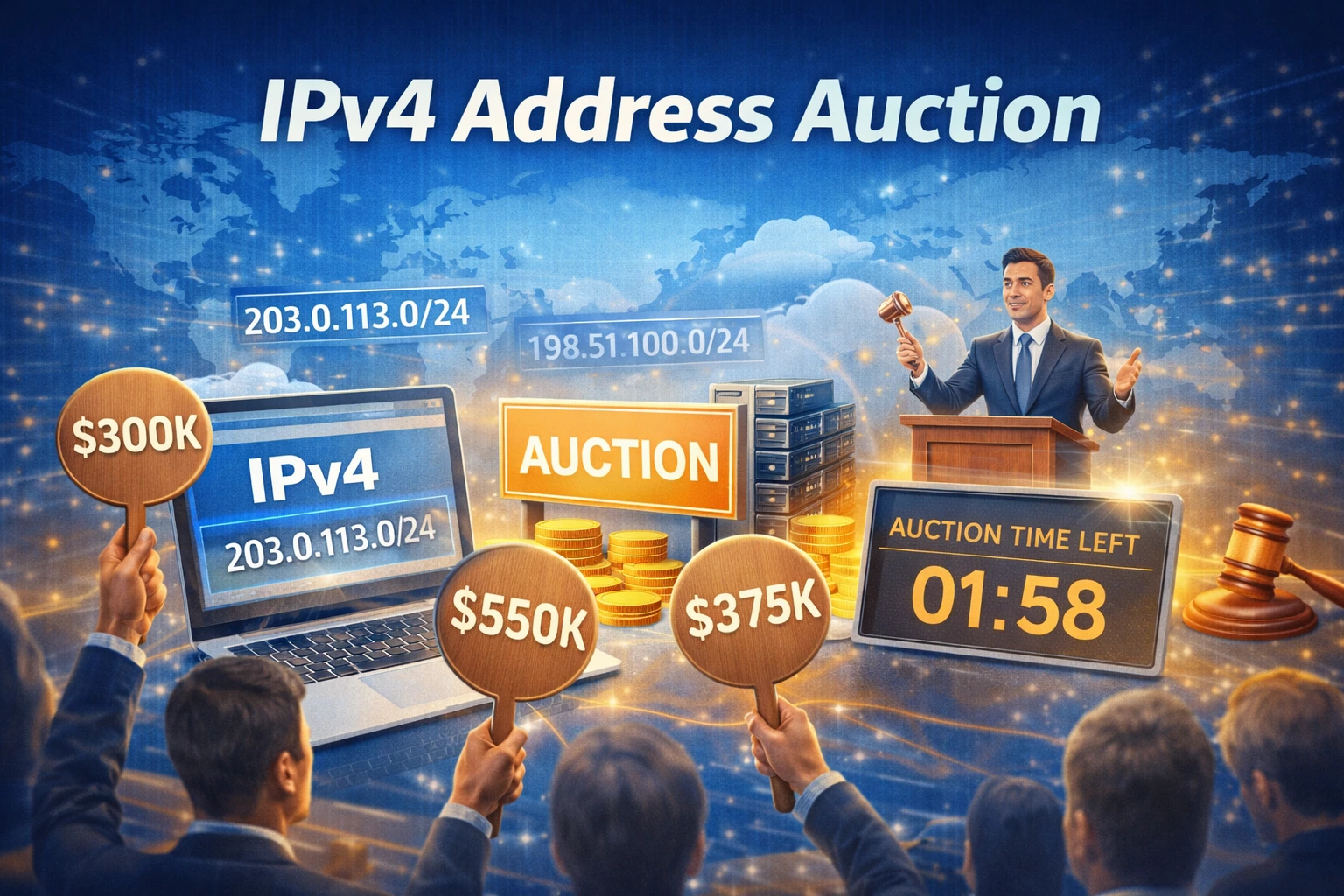
An IPv4 address auction is a market-based way for buyers and sellers to discover the value of scarce IPv4 address space. Instead of relying on fixed pricing alone, an auction allows interested buyers to compete for a block of IPv4 addresses, which can help reveal what the market is willing to pay at a given time.
In today’s post-exhaustion environment, IPv4 auctions are part of a broader transfer market shaped by scarcity, policy, and operational demand. They do not replace registry rules or due diligence. Instead, they serve as one method for matching sellers with buyers in a market where public IPv4 remains limited and commercially important.
Table of Contents
- What Is an IPv4 Address Auction?
- Why IPv4 Address Auctions Exist
- How an IPv4 Address Auction Works
- What Buyers Should Watch in an IPv4 Auction
- What Sellers Should Watch in an IPv4 Auction
- Are IPv4 Auctions the Same as Buying IPv4?
- Why Auctions Reflect Scarcity More Clearly
- Conclusion
- Frequently Asked Questions (FAQ)
What Is an IPv4 Address Auction?
An IPv4 address auction is a sales format in which an IPv4 block is offered to multiple potential buyers, and the final outcome is determined through competitive bidding rather than a simple fixed-price sale. In practice, this can happen through brokers, specialized marketplaces, or structured sale processes designed to maximize visibility and price discovery.
To understand why auctions exist, it helps to first understand what an IPv4 address is and why public IPv4 space continues to carry real operational value.
Why IPv4 Address Auctions Exist
IPv4 address auctions exist because freely available IPv4 space is limited, while demand continues across hosting, enterprise networks, cloud services, and Internet-facing applications. In that environment, auctions can help sellers expose a block to more interested buyers and can help buyers compete transparently for scarce address resources.
Scarcity is also why broader discussions around IPv4 exhaustion and its governance consequences remain so important when evaluating how address space is acquired and valued.
How an IPv4 Address Auction Works
1. A Seller Offers an IPv4 Block
The process begins when a current IPv4 holder decides to offer a block for sale. The block may be a smaller subnet such as a /24 or /22, or a much larger allocation depending on the seller’s holdings and business goals.
2. Buyers Review the Opportunity
Interested buyers assess the size, structure, region, documentation, and reputation of the address block. A serious buyer should not focus only on price. Block cleanliness, routing suitability, and transfer practicality also matter.
3. Bidding Takes Place
In an auction format, multiple buyers may submit bids within a defined time period or through a structured competitive process. The strongest offer is not always just the highest number. Reliability, readiness, and transfer eligibility may also influence whether a buyer is accepted.
4. Due Diligence and Documentation Follow
Winning an auction does not by itself complete the deal. The parties still need documentation, identity verification, and confirmation that the seller legitimately controls the block and that the buyer can complete the transfer properly.
5. The Registry Process Must Be Completed
The commercial outcome of an auction still has to be followed by the appropriate registry-side transfer process. This is one reason it is important to understand how IP address allocation and transfer governance shape the real movement of address resources after a deal is agreed.
What Buyers Should Watch in an IPv4 Auction
Block Reputation
A block with abuse history, spam issues, or blacklisting may be harder to deploy than a clean block. Buyers should look beyond the excitement of competitive bidding and evaluate how usable the subnet actually is.
Policy Fit
Not every buyer is equally positioned to complete every transfer. Registry region, organizational status, and documentation readiness all affect whether the final transfer can proceed smoothly.
Block Size and Strategic Fit
A larger block may look attractive, but it is only a good buy if it fits real operational need. The right auction target should match your routing plan, customer requirements, and long-term infrastructure strategy.
What Sellers Should Watch in an IPv4 Auction
Market Timing
Auction results depend on timing. A seller may see stronger bidding when demand is active for a certain block size or region, and weaker results when buyer appetite is softer.
Documentation Quality
Sellers should be able to show clear control of the block and present the supporting records needed for a transfer. Weak documentation can reduce trust and delay completion.
Operational Cleanliness
Blocks with cleaner history are usually easier to market and may attract stronger interest than blocks that require remediation or explanation.
Are IPv4 Auctions the Same as Buying IPv4?
An auction is one way to buy IPv4, but it is not the only way. Some transactions happen through direct negotiation, fixed-price arrangements, or broker-managed transfers. The auction format mainly affects how price is discovered and how buyers compete. The underlying transfer still depends on the same registry and documentation requirements as other IPv4 sales.
Why Auctions Reflect Scarcity More Clearly
Auctions often reflect scarcity more visibly than fixed-price listings because they show what multiple buyers are willing to pay in real time. In a market where IPv4 still holds commercial and operational value, auctions can make that value more visible. That is one reason the wider IPv4 assetization debate remains relevant when discussing how address space is priced and distributed.
Conclusion
An IPv4 address auction is a competitive sales process for scarce IPv4 resources, but it is only one part of a successful transaction. Buyers still need to verify the seller, evaluate the block, understand policy, and complete the registry process correctly. Sellers still need clean documentation, operationally sound blocks, and realistic expectations about demand. In today’s post-exhaustion market, auctions can be a useful price-discovery tool, but safe and effective IPv4 acquisition still depends on careful due diligence beyond the bidding itself.
Read More: Guide to Buy IPv4 Subnets Safely
Read More: What Factors Affect IPv4 Address Pricing?
Frequently Asked Questions (FAQ)
1. What is an IPv4 address auction?
It is a competitive sales format where buyers bid for an IPv4 block instead of purchasing it only through a fixed-price offer.
2. Does winning an auction complete the transfer?
No. The commercial result still needs proper documentation and the relevant registry transfer process to be completed.
3. Why are IPv4 auctions used?
They are used because IPv4 is scarce, and auctions can help match buyers and sellers while revealing what the market is willing to pay.
4. What should buyers check before bidding?
Buyers should check seller legitimacy, transfer eligibility, block reputation, size, documentation quality, and long-term operational fit.
5. Are auctions the only way to buy IPv4?
No. IPv4 can also be acquired through direct negotiation, broker-managed transfers, and fixed-price arrangements depending on the market structure.