

How LARUS Mitigates Registry Governance Risk for Customers
 Published:Last Updated: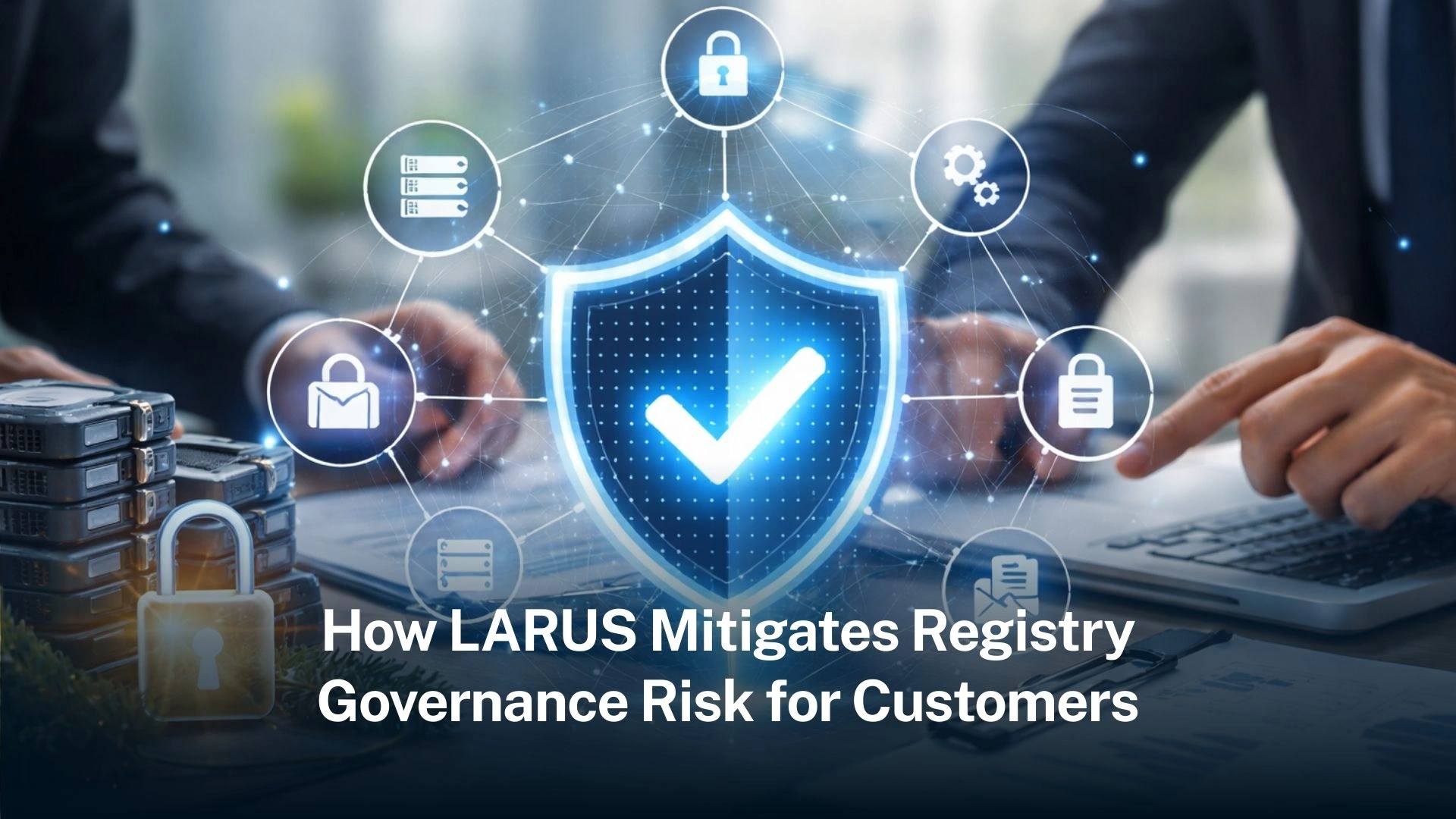
Table of Contents
- Understanding the registry governance risk behind IPv4
- Why IPv4 governance matters in modern infrastructure
- How the LARUS IPv4 model addresses registry exposure
- First-party IPv4 leasing explained
- Guaranteed renewal and continuity in the LARUS ip4v strategy
- Registry compliance and operational management
- The broader debate around registry governance
- Why enterprises are exploring leasing over ownership
- The future of IPv4 governance and infrastructure resilience
- FAQs
The LARUS IPv4 leasing model aims to shield networks from registry governance risk by centralising compliance, renewal responsibility and operational continuity.
-
The LARUS IPv4 first-party leasing model separates customers from direct registry contracts that govern IPv4 address allocations.
-
By managing registry relationships centrally, LARUS claims to absorb governance, compliance and renewal risks on behalf of operators.
Understanding the registry governance risk behind IPv4
The global internet relies on a system that allocates and tracks IP addresses. These resources are managed by Regional Internet Registries (RIRs). They keep records of who can use address blocks.
However IP addresses are not owned like assets. Organisations get them through agreements governed by registry policies and contracts. They do not have ownership rights.
Because of this structure businesses that rely on IP resources are exposed to registry governance frameworks. Registry agreements include conditions related to compliance, fees and policy adherence. They also limit registry liability for disruptions.
Industry experts have noted that these agreements were designed when IPv4 addresses were abundant and had financial value. Today the situation is different. Scarcity has made IPv4 a tradable digital resource with economic and operational value.
“When scarcity turns IPv4 into capital, renewal and governance risk becomes risk."
This risk is particularly important for internet service providers, cloud platforms and data-centre operators. Their services depend on IP address allocations.
Why IPv4 governance matters in modern infrastructure
Despite the ongoing deployment of IPv6 IPv4 continues to underpin large parts of the internet. Legacy systems, application compatibility requirements and global routing interoperability mean that IPv4 remains critical to network operations.
As IPv4 address pools became exhausted across regions in the 2010s secondary markets emerged. Organisations buy, sell or lease address blocks.
However purchasing addresses does not eliminate registry exposure. When an organisation acquires IPv4 resources through the market it still remains subject to registry policies and contractual frameworks governing those resources.
Registry agreements typically include provisions allowing termination of allocations for -compliance or policy violations. They also cap liability. Provide limited remedies if disruptions occur.
For operators whose platforms depend on network availability the governance layer becomes a potential operational risk.
How the LARUS ip4v model addresses registry exposure
The LARUS ip4v model is designed to mitigate these governance risks. It restructures how organisations access IPv4 resources.
LARUS operates as a first-party IPv4 leasing provider. It. Directly controls the address space it leases to networks.
Under this arrangement:
-
LARUS owns or controls the IP address resources.
-
The company maintains registry relationships and compliance responsibilities.
-
Customers lease the addresses for use in their own networks.
This approach effectively places LARUS between the registry system and the network operator.
By doing the company argues it can absorb governance-layer exposure that would otherwise fall on individual customers.
The company describes this model as risk transfer. Governance obligations are centralised within an infrastructure provider.
First-party IPv4 leasing explained
The term first-party leasing refers to leasing address space from the organisation that controls it. Not through brokers or intermediary marketplaces.
In the LARUS ip4v model the provider maintains ownership and administrative responsibility for the address blocks it leases.
This structure differs from third-party leasing arrangements.
LARUS says its address pools are deployed directly into customer networks. They remain under the company’s governance.
For operators the addresses behave operationally as if they are part of their network. The underlying registry relationship is managed by LARUS.
Guaranteed renewal and continuity in the LARUS ip4v strategy
One of the core features of the LARUS ip4v offering is guaranteed renewal leasing.
In conventional IPv4 leasing markets leases can be term or dependent on the original holder’s willingness to renew. This uncertainty can create planning challenges for operators.
LARUS states that because it controls its address pool it can offer predictable renewals and long-term availability.
The company positions this approach as an infrastructure-level service. Not a short-term leasing arrangement.
For enterprises predictable renewal can help prevent renumbering processes. These processes require network reconfiguration and operational downtime.
Registry compliance and operational management
Another component of the LARUS IPv4 approach involves operational tasks associated with registry compliance.
These tasks include:
-
Managing registry records. Updates
-
Handling policy compliance with RIR frameworks
-
Coordinating transfers and administrative changes
-
Maintaining routing and reputation management
LARUS states that its internal compliance teams manage these processes. Customers do not have to interact with registry systems.
This centralised governance management can reduce complexity. It is for network operators that might otherwise need expertise in registry policy and address administration.
The broader debate around registry governance
The emergence of models like LARUS ip4v reflects discussions about governance structures in internet infrastructure.
The registry system has historically been a community-driven coordination framework. Not a regulatory regime.
Critics argue that this structure may not fully reflect the reality of modern IPv4 markets.
As IPv4 became scarce and began trading at market prices its role shifted. It is from a technical identifier to a digital infrastructure asset.
Some analysts believe this change requires approaches to managing governance risk. Including portability of number resources and stronger legal protections for operators.
Others argue the current registry model has successfully supported decades of internet growth. It continues to function
Regardless of the policy debate infrastructure operators are increasingly evaluating how their IPv4 strategy aligns with term operational resilience.
Why enterprises are exploring leasing over ownership
Many organisations historically preferred to purchase IPv4 address blocks through the market.
However this approach has limitations:
-
High upfront capital costs
-
Complex registry transfer processes
-
Ongoing compliance obligations
-
Exposure to governance risk
Leasing models, including LARUS ip4v attempt to address these issues. They shift IPv4 access from a capital investment to a service.
Because the provider retains ownership and registry responsibilities enterprises can focus on network operations. Not governance administration.
For growing platforms and infrastructure providers this operational flexibility can be an important factor in scaling services.
The future of IPv4 governance and infrastructure resilience
The debate around IPv4 governance is likely to continue as the internet evolves.
While IPv6 adoption gradually expands address capacity IPv4 will remain essential for compatibility and legacy infrastructure for many years.
This means operators will need to manage both governance risks associated with the protocol.
Models such as LARUS ip4v represent one approach to addressing those challenges. They centralise registry exposure within infrastructure providers.
Whether through leasing, ownership or hybrid strategies organisations are increasingly recognising that address governance is a part of network resilience.
FAQs
1. What is LARUS ip4v?
LARUS IPv4 refers to the IPv4 leasing model offered by LARUS. Organisations lease IPv4 addresses directly from the provider’s controlled address pool of buying them.
2. How does LARUS reduce registry governance risk?
LARUS remains the registry member responsible for compliance and policy adherence. Customers lease addresses without interacting with registry systems.
3. What is first-party IPv4 leasing?
First-party leasing means the provider owns or controls the address space it leases. It eliminates intermediaries. Centralises responsibility for governance and compliance.
4. Why do organisations still need IPv4?
Despite IPv6 adoption many systems and services still rely on IPv4 compatibility. IPv4 addresses are essential for network operations.
5. Is leasing IPv4 better than buying it?
The best approach depends on an organisation’s strategy. Leasing can reduce capital costs and administrative obligations.