

Acquiring IPv4 Addresses
 Published:Last Updated:
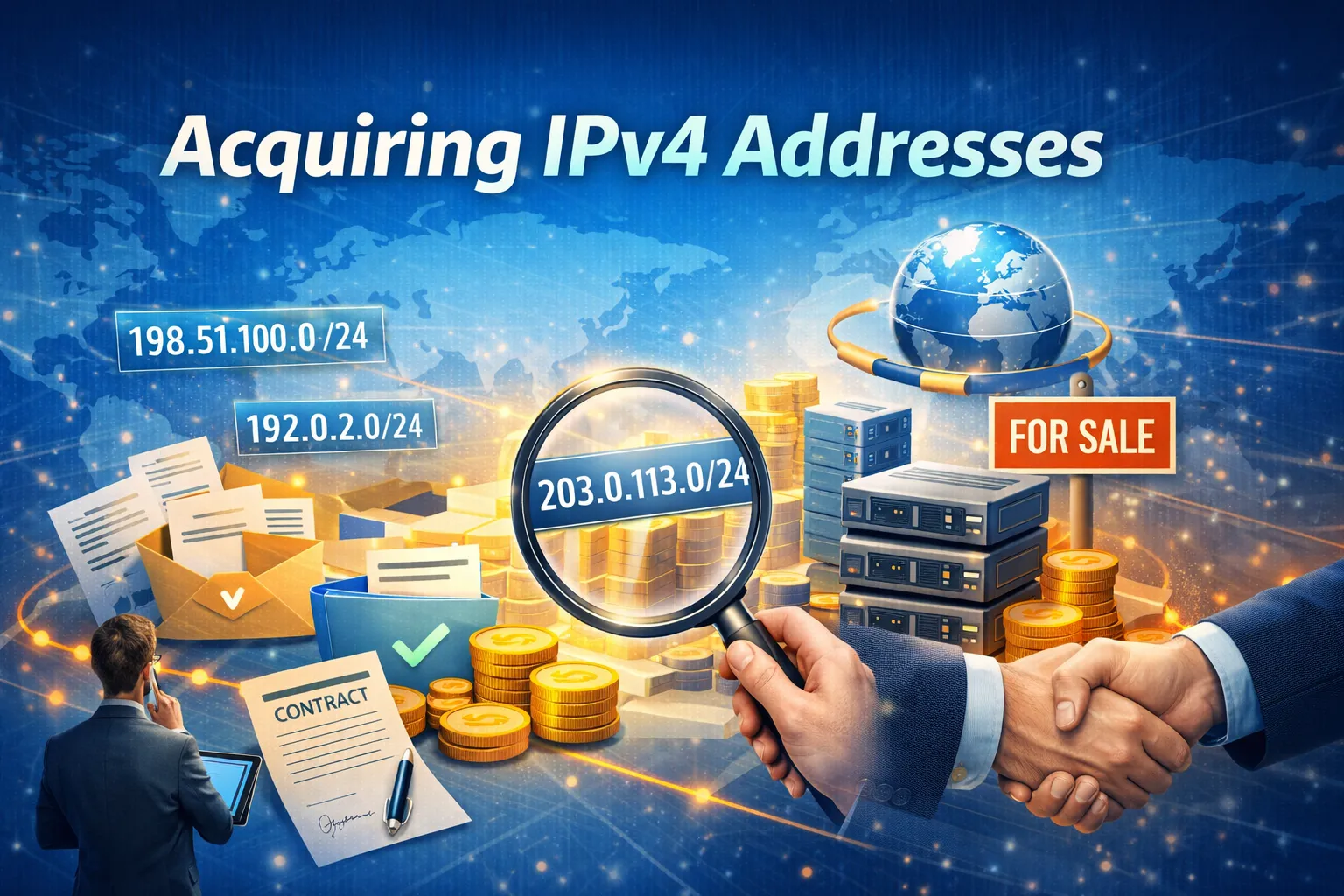
Acquiring IPv4 addresses has become an important issue for organizations that still need public IPv4 space for hosting, cloud deployment, customer services, and network expansion. In the early Internet era, many organizations could obtain IPv4 addresses more directly through registry allocation. Today, because freely available IPv4 space is limited, acquiring IPv4 usually means using transfers, leasing arrangements, or other market-based options.
This means that acquiring IPv4 is no longer just a technical step. It is now a strategic infrastructure decision involving policy, pricing, operational planning, and long-term business needs.
Table of Contents
- What Does Acquiring IPv4 Addresses Mean?
- Why Organizations Still Need to Acquire IPv4
- Main Ways to Acquire IPv4 Addresses
- What to Consider Before Acquiring IPv4
- How to Acquire IPv4 Safely
- Buying vs Leasing: Which Acquisition Model Is Better?
- Why Acquiring IPv4 Is Now a Strategic Decision
- Conclusion
- Frequently Asked Questions (FAQ)
What Does Acquiring IPv4 Addresses Mean?
Acquiring IPv4 addresses means obtaining the right to use public IPv4 space for your organization’s network and Internet-facing services. Depending on the route you choose, this may involve a transfer of registered resources, a lease for temporary access, or limited access through registry post-exhaustion mechanisms.
To understand why IPv4 acquisition matters, it helps to first understand what an IPv4 address is and why public address space remains so important for live Internet operations.
Why Organizations Still Need to Acquire IPv4
Even with IPv6 adoption increasing, many organizations still need IPv4 because customers, systems, software, and connected services continue to rely on IPv4 compatibility. Public websites, cloud workloads, SaaS platforms, hosting environments, and enterprise services often still require routable IPv4 resources to operate effectively.
That continuing demand is one reason IPv4 exhaustion and its governance consequences remain highly relevant to infrastructure planning.
Main Ways to Acquire IPv4 Addresses
1. Buy IPv4 Through a Transfer
One of the most common ways to acquire IPv4 today is through a transfer. In this model, an organization obtains address space from an existing holder through a policy-compliant registry process. This option is generally better suited to organizations that want long-term control of the address block and plan to use it as part of their long-term infrastructure strategy.
2. Lease IPv4 for Temporary Use
Another way to acquire IPv4 is by leasing it. Leasing allows an organization to use address space for a defined term without buying it outright. This can be a practical option for businesses that want lower upfront cost, more flexibility, or a faster way to secure address space for short- to medium-term needs.
Leasing is especially attractive when an organization sees IPv4 as a temporary operational requirement rather than a permanently held asset.
3. Limited Post-Exhaustion Registry Options
Some Regional Internet Registries still have limited post-exhaustion mechanisms, but these options are highly constrained and often insufficient for organizations with meaningful public IPv4 demand. This is why transfers and leasing have become so important in practice.
What to Consider Before Acquiring IPv4
Actual Business Need
Before acquiring IPv4, your organization should determine how much address space it truly needs. Underestimating demand can create future shortages, while over-acquiring may increase cost unnecessarily. Good address planning should match growth projections, routing needs, and service requirements.
Time Horizon
If your organization expects to rely on IPv4 space for many years, buying may make more sense. If the need is shorter term or uncertain, leasing may be more efficient. This is why understanding the difference between temporary access and long-term control is so important.
Budget Structure
Acquiring IPv4 through purchase usually involves a larger upfront capital commitment. Leasing spreads cost over time and may better suit organizations that want to preserve cash or treat IPv4 as an operating expense instead of a capital asset.
Policy and Governance Environment
IPv4 acquisition does not happen outside the governance system. Buyers and lessees need to understand how IP address allocation, registry rules, and transfer processes affect what can actually be acquired and how safely it can be used.
How to Acquire IPv4 Safely
Verify the Counterparty
If you are buying or leasing IPv4 from another party, make sure the counterparty can actually provide legitimate access to the address space. Identity, control of the block, and registry consistency all matter.
Check the Quality of the Block
The operational quality of the address block matters just as much as its size. A clean block is easier to deploy than one associated with abuse, spam, or blacklisting. Reputation affects value and usability.
Use Proper Documentation
A safe acquisition requires clear documentation, including the structure of the transaction, the exact block involved, and the responsibilities of each party. Poor documentation can create risk even if the commercial terms look attractive.
Complete the Registry Side Properly
A commercial agreement alone is not enough. Safe acquisition depends on the relevant registry processes being completed correctly where applicable. This is part of why some infrastructure analysts continue to debate registry power and liability in today’s address environment.
Buying vs Leasing: Which Acquisition Model Is Better?
There is no universal answer. Buying is generally better for long-term control and strategic certainty. Leasing is generally better for flexibility and lower upfront cost. The better model depends on how long the address space will be needed, how central it is to your revenue-generating infrastructure, and whether your organization prefers capital ownership or temporary access.
Why Acquiring IPv4 Is Now a Strategic Decision
Because IPv4 remains limited and operationally important, acquiring it is now part of broader business and infrastructure planning. Organizations increasingly view public IPv4 space not just as a technical necessity, but as a scarce resource tied to growth, service delivery, and balance sheet discipline.
This is also why discussions around whether scarcity will simply disappear with IPv6 remain contested, especially in the context of the broader IPv6 escape from scarcity narrative.
Conclusion
Acquiring IPv4 addresses today usually means using transfers, leases, or other limited post-exhaustion options rather than relying on broad new allocations. The best route depends on your organization’s budget, time horizon, infrastructure needs, and appetite for long-term control. In a scarcity-driven market, safe and informed acquisition is essential because IPv4 remains a practical and strategically important part of Internet operations.
Read More: Buy IPv4 Address
Read More: Leasing vs Buying IPv4 Address
Frequently Asked Questions (FAQ)
1. What does acquiring IPv4 addresses mean?
It means obtaining the right to use public IPv4 address space through a transfer, lease, or another limited registry-based option.
2. Can organizations still acquire IPv4 today?
Yes. Organizations can still acquire IPv4, but it is usually done through transfers, leases, or constrained post-exhaustion mechanisms rather than wide open free-pool allocation.
3. Is buying better than leasing?
It depends. Buying is usually better for long-term control, while leasing is usually better for flexibility and lower upfront cost.
4. Why is IPv4 acquisition still important if IPv6 exists?
Because many live Internet systems, customer environments, and services still depend on IPv4 compatibility, so demand has not disappeared.
5. What should I check before acquiring IPv4?
You should check your business need, the transaction model, the quality of the block, the legitimacy of the counterparty, and the relevant registry or governance framework.