


4 Key Factors Influencing IPv4 Addresses Market Trends
 Published:Last Updated:
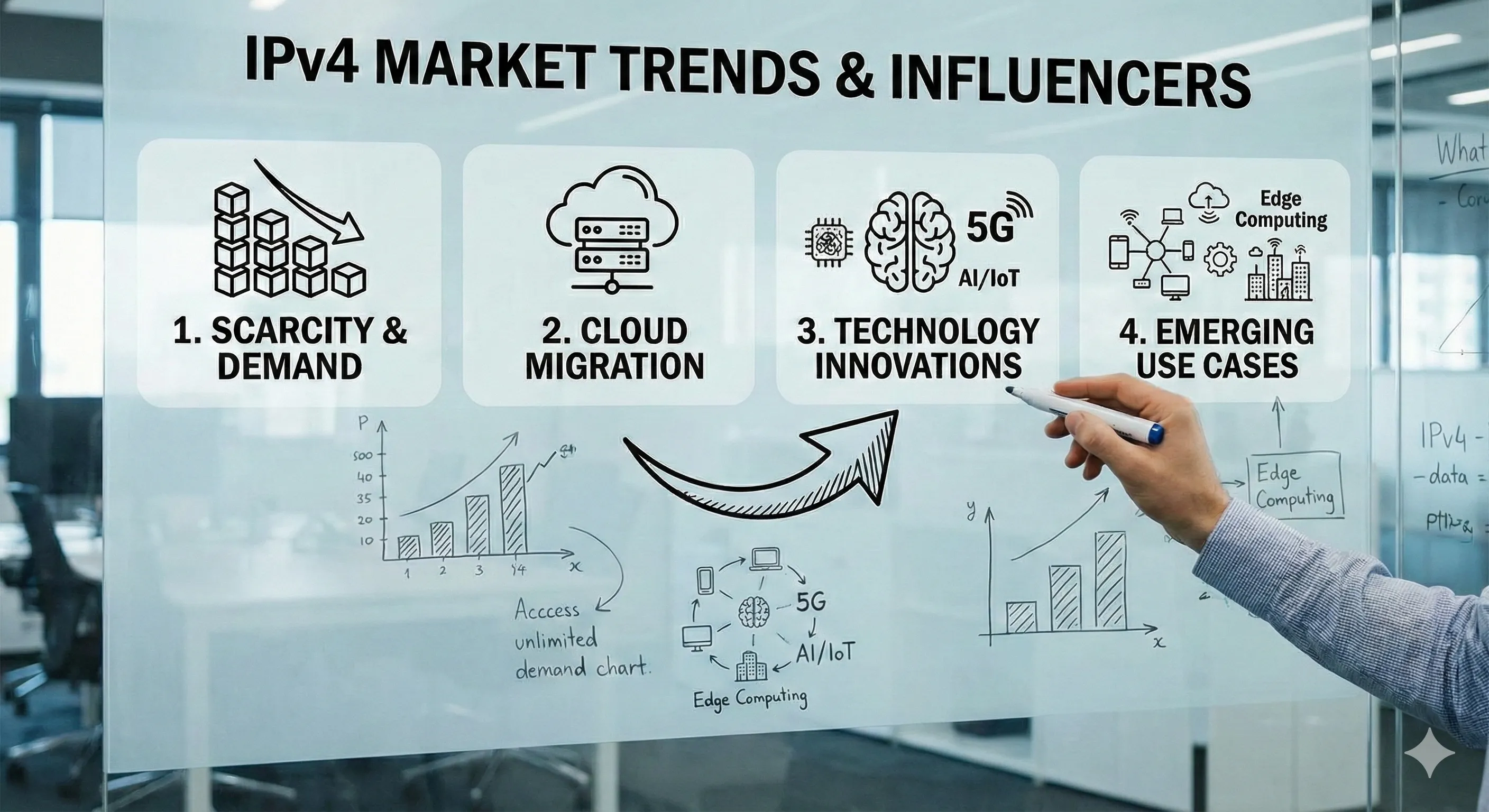
In the digital era, where connectivity is the cornerstone of modern business operations, the IPv4 address market stands as a critical arena where supply, demand, and regulatory landscapes converge. Understanding the key factors that sway IPv4 address market trends is crucial for businesses, investors, and industry stakeholders alike. In this article, we unravel the four pivotal factors that shape the dynamics of the IPv4 address market.
Table of Contents
- IPv6 Transition Dynamics
- Regulatory Policies and Compliance Requirements
- Supply and Demand Dynamics
- Technological Innovations and Emerging Use Cases
- Frequently asked questions (FAQ)
IPv6 Transition Dynamics
Perhaps the most significant factor influencing IPv4 address market trends is the ongoing transition to IPv6. With the exhaustion of IPv4 address space, organizations worldwide are compelled to adopt IPv6 to accommodate the burgeoning demand for IP addresses. The pace and extent of IPv6 adoption directly impact the dynamics of the IPv4 address market. As IPv6 deployment accelerates, the demand for IPv4 addresses may decrease in certain regions or industries, leading to shifts in pricing and trading patterns.
Regulatory Policies and Compliance Requirements
Regulatory policies play a pivotal role in shaping IPv4 address market trends. Government regulations regarding IP address allocations, transfers, and ownership rights vary across jurisdictions and can significantly impact market dynamics. Compliance with regulatory requirements becomes paramount for buyers and sellers in the IPv4 address market, influencing transaction volumes, pricing strategies, and market liquidity. Regulatory changes or interventions can introduce uncertainty and volatility into the market, necessitating careful monitoring and adaptation by market participants.
Supply and Demand Dynamics
The interplay between supply and demand dynamics is a fundamental driver of IPv4 address market trends. As the pool of available IPv4 addresses diminishes, the scarcity of addresses drives up prices and intensifies competition among buyers. Organizations seeking to expand their network infrastructure or enter new markets contribute to the demand side, while address holders, including legacy holders, control the supply. Market trends reflect fluctuations in supply levels, address utilization rates, and demand patterns across different industries and regions. Address brokers, auction platforms, and specialized marketplaces facilitate transactions and play a crucial role in balancing supply and demand dynamics in the IPv4 address market.
Technological Innovations and Emerging Use Cases
Technological innovations and emerging use cases for IP addresses exert influence on IPv4 address market trends. The proliferation of Internet of Things (IoT) devices, the expansion of cloud computing infrastructure, and the rise of edge computing create new avenues of demand for IPv4 addresses. Organizations across various sectors, including telecommunications, healthcare, and manufacturing, require IP addresses to support their digital initiatives and connectivity requirements. Market trends reflect the evolving needs and applications of IP addresses, with demand patterns shifting in response to technological advancements and industry trends.
Frequently asked questions (FAQ)
-
What are the key factors influencing IPv4 market trends?
Common drivers include IPv6 adoption pace, regulatory/RIR transfer policies, supply vs. demand, and market behavior (pricing expectations/speculation).
-
How does IPv6 adoption affect IPv4 prices?
Faster IPv6 adoption can reduce long-term IPv4 pressure, but many real-world systems stay dual-stack—so IPv4 demand often persists even as IPv6 grows.
-
How do RIR policies and regulations influence the IPv4 market?
Transfer rules, documentation requirements, and region-specific policies can affect how easily blocks move between organizations—shaping liquidity, timelines, and pricing.
-
Why does “supply and demand” still dominate in IPv4?
IPv4 supply is finite, while demand is driven by hosting, cloud, VPNs, legacy environments, and growth in internet services—so prices respond to real scarcity and buyer needs.
-
What should buyers/lessors check besides price?
Look at block size, reputation/cleanliness (blacklists), region constraints, and compliance/ownership clarity—these factors can impact usability and long-term value.